Talk
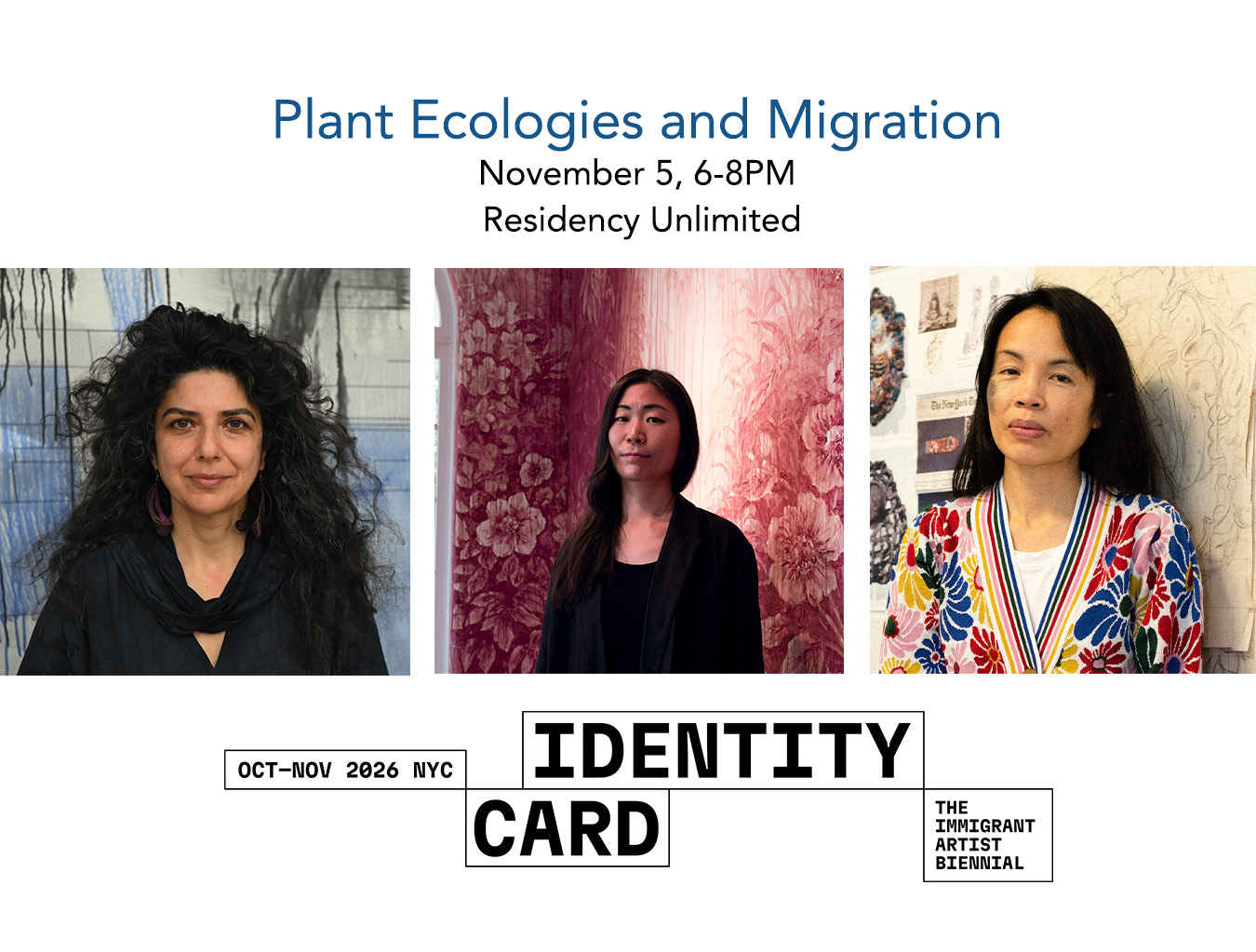
Plant Ecologies and Migration
November 5, 2026 – November 5, 2026
6:00 pm – 8:00 pm
Residency Unlimited,
360 Court St #4, Brooklyn, NY 11231
This panel explores how immigrant and diasporic artists use plants and the garden not only as a stand-in for place, but as a framework and vocabulary for thinking through migration: transplantation, adaptation, rooting, and preservation. Many plants and crops have traveled through colonial networks of trade, empire, and labor: the same infrastructures that have displaced communities and transformed ecologies. In this sense, botanical histories are inseparable from histories of migration, extraction, and colonial expansion.
This discussion also considers how taxonomic categories such as “native,” “non-native,” and “invasive” mirror the language and systems used to regulate the movement of people, determining who is perceived as belonging and who is marked as out of place. Botanical classification thus becomes part of a broader logic of indexing, surveillance, and control, exposing the ways scientific and political systems have long been intertwined. Plants become powerful metaphors for questioning borders, citizenship, and belonging while also highlighting the resilience of communities that continue to take root despite displacement.
Bringing together Bahar Behbahani, Rachelle Dang, and Sujin Lim, the panel explores distinct yet interconnected approaches to these themes: Behbahani’s practice draws on gardens as spaces where cultural memory, exile, and political histories converge, examining the relationships between landscape, migration, and identity; Dang investigates the movement of plants and agricultural knowledge across diasporic networks, revealing how cultivation is entangled with histories of labor, colonialism, and ecological transformation; and Lim’s work considers the material and symbolic lives of plants reflecting on care, adaptation, and the fragile conditions of belonging. Together, these artists demonstrate how plants are embedded within larger colonial structures that continue to shape histories of movement, classification, labor, and belonging.
Plant Ecologies and Migration is hosted by and will take place at Residency Unlimited (360 Court St #4, Brooklyn, NY 11231), which supports the creation, presentation, and dissemination of contemporary art through its unique residency program and year-long public programs. This program is presented as a part of the Immigrant Artist Biennial.
Bios:
The Immigrant Artist Biennial is the only large-scale biennial dedicated to platforming the voices of immigrant and diaspora artists. Its third edition, Identity Card, will unfold through performances, panels, screenings, and gatherings in New York City from October to November, 2026, and is curated by Sanna Almajedi, Sofia Thiệu D’Amico, Eva Mayhabal Davis, and Anna Khimasia.
Bahar Behbahani is an artist, educator, and collaborator whose interdisciplinary work explores memory, erasure, adaptation, and the search for a sense of place. For over a decade, the Persian garden has served as a central study in her practice, bridging personal history with wider histories of power, climate, and the futurity of ancestral knowledge. A transplant from the land of sun, Iran, she has adapted New York as her home, where she is practicing hospitality and reciprocity through public art and gatherings. @baharbehbahani | baharbehbahani.com
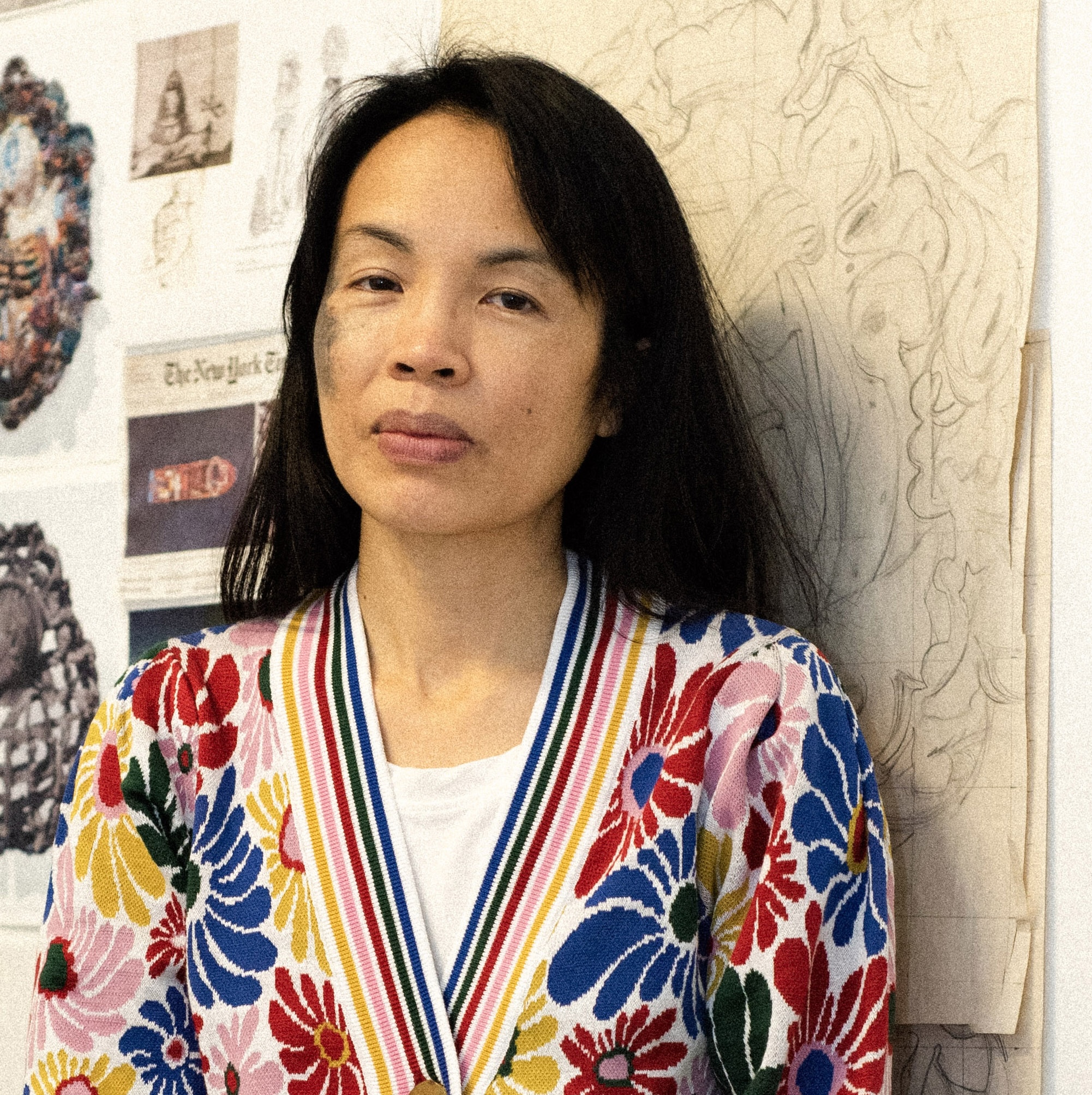
Rachelle Dang considers her own embodied experiences in relation to environmental, ancestral, and colonial histories, as they relate to the Pacific and Hawai`i, her birth place. Dang often draws on plant life and organic materials to explore how diasporic identity is shaped through processes of care and cultivation. In Botanical Cage and Perimeter Wall (2018) she reconstructs an 18th century shipping carrier designed to transport breadfruit saplings from Tahiti to England. Surrounded by ceramic breadfruit in various stages of decay, “this project of imperial botany had the end goal of cultivating breadfruit in the Caribbean to buttress plantation profits and to relieve environmental catastrophe and famine from monocropping sugar.” Botanical Cage and Perimeter Wall reiterates the relationships between violence, slavery and labor, along with the ecological legacies of colonialism. @rachelledangstudio | rachelledang.com
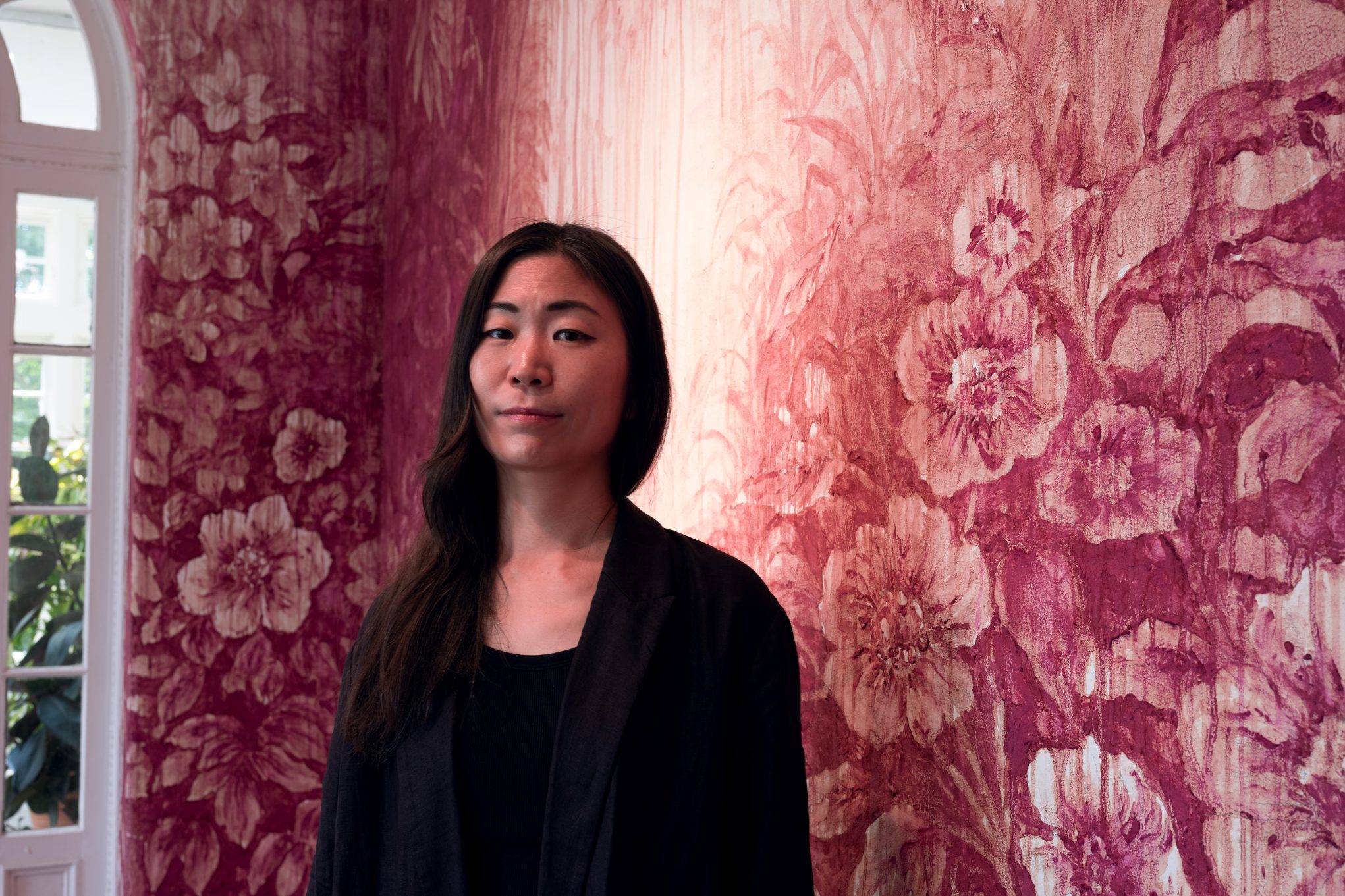
Originally from Seoul, Korea, Sujin Lim explores the emotional and ecological dimensions of place through site-specific installations, sculptures, and video works that reimagine landscapes as surreal, metaphorical spaces. Her research-based practice traces personal memories embedded in a site outward into ecological and geopolitical shifts, often through natural materials as carriers of memory and displacement. For her recent project at Wavehill, Memories in Red, she created an immersive environment using natural red pigment extracted from Rosa rugosa – a plant once native to Korea now extinct due to changing shorelines, it was brought to New York mid-19C to help with erosion along the shores of the Hudson River. Lim’s work reflects both the fragility of the flower’s natural habitat and its entanglement with histories of displacement. @_sujinlim | sujinlim.com
Anna Khimasia is an independent curator and has curated exhibitions and performance events in both Canada and the United States. Her curatorial projects are often collaborative and focus on underrepresented voices and histories. She was the 2023–24 AIRspace Curator-in-Residence at Abrons Arts Center and is a co-founder of International Arrivals (IA), a NYFA-sponsored project supporting artists hailing from countries in conflict. She produces and hosts the IA podcast, which features conversations with international artists about displacement, migration, and transnational belonging. Recent publications include a new essay on Harold Offeh’s early performance video work and an assistant editor role for Kambui Olujimi: North Star, Meditations on Boundlessness. She has taught courses on contemporary art and performance at Carleton University, UCLA, and Rutgers University, where she is currently a lecturer. She received her Ph.D. from the Institute of Comparative Studies in Literature, Art and Culture (ICSLAC) at Carleton University. @annakhimasia_art
Funding Credits:
The event is made possible by the New York State Council on the Arts, the New York City Department of Cultural Affairs in partnership with the City Council, Ruth Foundation for the Arts, and other foundations and individuals.
