Hiroko Kubo: From Hands to Feet
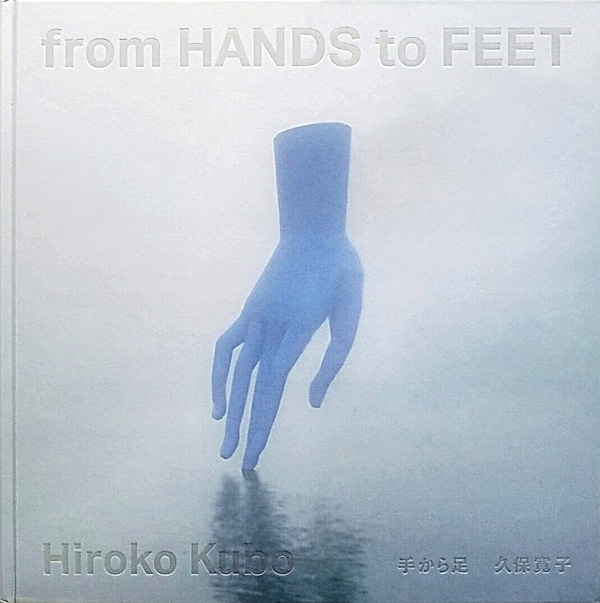
What I have been contemplating throughout my career as an artist is how to create works that update art history using sculpture as an art form.
Since the early days of my artistic practice, I have sought answers to the fundamental question: Why do humans engage in creative activities? I looked for these answers in prehistoric art, indigenous art, and religious art. Initially, my inspiration came from the formal beauty, locality, and mythology inherent in these art forms. However, after studying art in the United States, I began to view the art history of non-Western regions, including Japan, from a broader perspective. This shift led me to adopt a more conceptual approach inspired by anthropological theories.
During my two years in the dry climate of the American South, I found myself growing increasingly nostalgic for the humid climate in which I was raised—the rice fields, streams, and rural landscapes of my homeland. This experience allowed me to physically grasp Tetsurō Watsuji’s concept of fūdo (climate and culture). At the same time, the connections between my various interests—monotheism and polytheism, the history of idol worship and iconoclasm, the relationship between the West and the non-West, and the history of colonialism and art—began to form a coherent framework. This comprehensive perspective has since become a central theme in my work.
In 2018, I got married and gave birth, and this experience deepened my interest in the female body itself, as well as in the representation of women and motherhood in art history. Recently, this has become a significant source of inspiration. Moving forward, I want to explore what I, as a non-Western woman, can add to the layers of art history—particularly the history of sculpture, which has been shaped within a predominantly male Western society.
-Statement from the artist